
Permits and regulations
Renovation permits in Montreal: when do you actually need one?
The general rule: if the work touches the structure, the building envelope, the number of dwelling units or the exterior appearance, your borough requires a permit. Purely cosmetic work does not.
RBQ License
5797-3208-01
APCHQ Member
Provincial Association
Liability Insurance
$5,000,000
Workmanship Warranty
1 Year
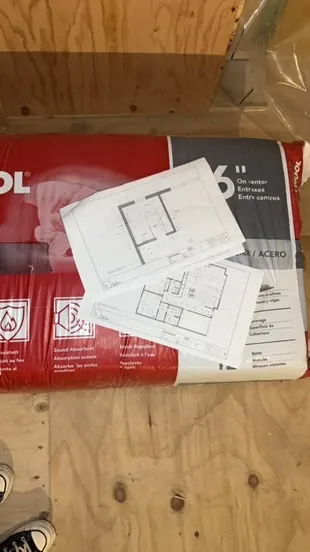
In Montreal, residential renovation permits are not issued by the central City. They are issued by the boroughs. That is the first thing that catches homeowners off guard. Two identical houses, one in Rosemont and one in Verdun, can go through two different processes for the same work, because each borough applies its own planning by-laws on top of the municipal framework.
Here is how to find your way through it, what actually triggers an application, and why permits belong at the start of a project rather than the week before demolition.
Work that almost always requires a permit
The logic behind the by-laws is straightforward: as soon as the work affects the safety of the building, how many people it houses, or how it looks from the street, the city wants to see it before it is built.
- Touching the structure: removing or altering a load-bearing wall, changing joists, redoing a foundation, lowering a basement floor.
- Adding space: rear extensions, added storeys, sunrooms, any increase in habitable volume.
- Altering the envelope: new openings, changing the cladding, roofing work that modifies the structure.
- Changing the number of dwelling units: adding or removing a unit, converting a plex.
- Altering the exterior appearance in sectors where the borough regulates architecture: windows, doors, front stairs and balconies.
- A good share of plumbing and electrical work, particularly when services are moved or added.
Work that normally does not
Anything that stays cosmetic, with the layout unchanged, usually does not trigger an application.
- Paint, wallpaper, mouldings.
- Replacing floor coverings.
- Replacing kitchen cabinets without moving plumbing or electrical.
- Replacing a plumbing fixture in the same location.
How an application unfolds
- Confirm with the borough whether a permit applies, before anything gets drawn.
- Have the required drawings produced. Depending on the work, that means a building technologist, an architect or a structural engineer.
- File the application with the documents your borough requires.
- Answer requests for clarification. This is where most of the delay happens: an incomplete file goes back to the bottom of the pile.
- Receive the permit, post it on site, then start the work.
Timelines vary by borough, by time of year and by how complex the file is. In sectors subject to architectural review, expect an additional committee step. That is why we build permits into the schedule during planning, rather than treating them as a last-minute formality.
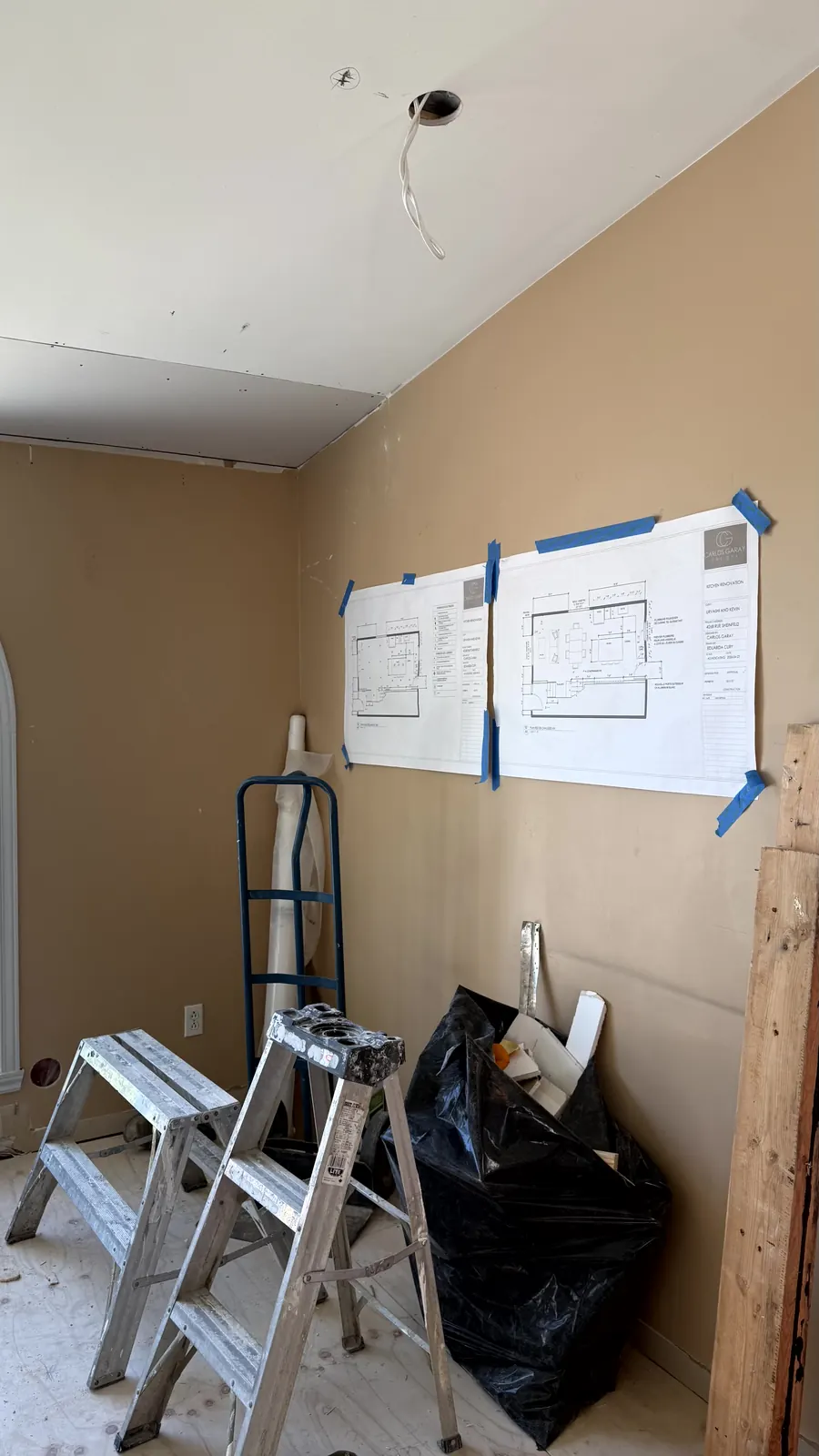
What an unpermitted job risks
- A stop-work order, with the site open and subcontractors already mobilized.
- Fines, plus the obligation to regularize after the fact.
- Having to undo work that looks compliant but was never authorized.
- An insurance problem: a loss connected to undeclared work can complicate a claim.
- A blocked sale, when the inspection or the notary uncovers unpermitted work.
One more point many homeowners are unaware of: in Quebec, renovation work above $2,000 must be carried out by a contractor holding a licence from the Régie du bâtiment du Québec. A contractor who offers to "skip the permit" is offering to hand you the risk.
Unsure about your project? We confirm with your borough whether a permit applies before we ask you to sign anything.
Get your free evaluationLetting your general contractor handle the permit
This is the main point of a genuine turnkey contract. At Kasa, the permit application is part of the service: we retain the professionals required, assemble the file, submit it on the client’s behalf and follow it through to issuance. The homeowner never has to go back and forth with the borough, and the construction schedule reflects the real timeline rather than a hoped-for one.
That applies just as much to a full home renovation as to an extension or a post-disaster rebuild, where the permit also has to be coordinated with the insurer.
Your project
A question about your own job site?
The discovery call is free. We tell you straight what your project involves, even when the answer is “not right now”.
Free evaluation(514) 812-8763RBQ 5797-3208-01 · APCHQ member · Insurance 5 000 000 $
Let’s talk about your project
A free evaluation, with no obligation
Describe the project in a few lines. We come back to you with the right questions rather than a price pulled out of thin air.
(514) 812-8763